Tag Archives: Savior

STUDY GUIDE FOR CHAPTER 6 ~ THE AFTERMATH

1.  What Does Aftermath Mean Anyway?

Up until this one, the previous lessons have flowed easily from my heart. I did not have to search for ideas, content, or questions that brought rhyme and reason to the topic to be discussed. They were just there—right on the tips of my fingers as I typed. So why is this chapter different? Could it be because none of us want to talk about painful things?

In my book, There Is Life after Tragedy, I started Chapter 6 with the following words: “Aftermath seems like an ugly word to me….” If you have suffered a great loss of life, you know exactly why aftermath is an ugly word. For those who have endured one or more deaths at the same time, the ugliness is multiplied many times over. Tragedy can exponentially increase the pain and heartbreak as the reality of the loss soaks into our hearts and minds. In short, it is indeed ugly.

Do you know any other descriptive words that clearly depict aftermath?

__________________________________________________________________

__________________________________________________________________

Although aftermath is ugly, it is also normal and necessary. We will all have to deal with aftermath someday, even for the loss of a loved one who dies of old age. Why? Because loss of life always forces us to face the “What’s next for me?” question. The many changes and challenges that lie ahead make up a large portion of the aftermath. What used to be is no longer. Who used to be with us is not here anymore. In fact, for many people, everything changes.

On page 46 of my book, I listed fifteen unpleasant things that humans have to deal with that create an aftermath in our lives. Things such as death, accidents, divorce, coronavirus, etc. However, I have come to realize that the list is not a complete list, and I’m not sure there is a complete list. Perhaps that is why the last line of my list says: “after, after, after….”

What gut-wrenching life events could you add to my list?

__________________________________________________________________

__________________________________________________________________

The Oxford Dictionary defines aftermath as “consequences of a significant unpleasant event.” While we may not classify all losses as tragic, we must understand that tragedy comes in many shapes and sizes. Sometimes we have to clean up a mess someone else made, and sometimes we have to clean up our own mess. Regardless, we all need one thing in order to survive the aftermath—God!

2.  We Are Never Alone

God never expects His children to go through any part of life by ourselves. We always have His Presence with us. We always have His Peace inside us. We always have His Grace covering us. If we have asked Jesus to save us and send the Holy Spirit to come and live in our hearts, then He did both of those things. The truth is that we are truly never alone! Our challenge is to learn how to tap into that Source that indwells all believers.

To get over this mountain called aftermath, we simply must lean on God’s promises to get us there. He means what He says, and we can trust what He says in the darkest hours of life. If He fails us there, how can we trust Him with our eternal destiny? It is a rock-solid, iron-clad truth that God’s Word never fails!

What can you do right now to get that one issue settled in your heart and mind once and for all?

__________________________________________________________________

__________________________________________________________________

For our scripture reading for this lesson, I want us to look at Isaiah 43:1-3a. I have included it below from the New Living Translation.

1 But now, O Jacob, listen to the Lord who created you. O Israel, the one who formed you says, “Do not be afraid, for I have ransomed you. I have called you by name; you are mine.

2 When you go through deep waters, I will be with you. When you go through rivers of difficulty, you will not drown. When you walk through the fire of oppression, you will not be burned up; the flames will not consume you.

3 For I am the Lord, your God, the Holy One of Israel, your Savior.

If we read Isaiah’s life story, we would realize that he had firsthand knowledge about deep waters, rivers of difficulty, and the fires of oppression. He was certainly validated to write about such hard things. His words of comfort to us in these verses are encouraging to say the least. The truth is that Isaiah knew these statements by experience because he had trusted in God for survival and God did not fail him.

Have you ever had a situation in your life when you trusted in God and then experienced His divine help where you were not afraid, not alone, didn’t drown, or were not consumed by your trials? Those kinds of experiences are truly a hallmark of our faith in a Faithful God. Briefly list one or more those experiences below.

_________________________________________________________________

_________________________________________________________________

3. What’s So Amazing About Grace?

Obviously, I believe that God’s grace is amazing since I donated over two full pages to that subject in my book. Actually, grace is a big deal. Without it we would all be in big trouble—in this world and in eternity. Ephesians 2:8-9 says, “For by grace are you saved through faith; and that not of yourselves; it is the gift of God: not of works, lest any man should boast.”

Grace is a gift God has chosen to give to His children. We cannot earn it, buy it, steal it, borrow it, or con God out of it. All we can do is ask for it, believe He says “yes” to our prayers, receive it by faith, and testify to what He has given to us. In real terms, God gives us grace because He wants to.

When it comes to receiving God’s help to survive an aftermath, our greatest ally is grace. It is freely supplied to those who ask Him for it. You may be thinking—but how do we receive this grace; how do we make it ours? The answer is clear: we receive grace exactly the same way we got saved—by faith! We will receive grace through faith, making faith the vehicle by which grace becomes a reality in our lives.

We’ve already settled the fact that God cannot lie. Since God is incapable of breaking a promise, then any disconnect must be on our end. When we think He is silent, think again. God doesn’t have to use words—His presence, peace, grace, and love all speak volumes to our hurting souls. So, in those times when it seems as though God is silent, we must use our faith to stir our faith!

But how do we use our faith to stir our faith? It’s basically quite simple. If you are a born-again believer is Jesus Christ, you only got there one way—by faith, as discussed above in Ephesians 2:8-9. Read this next sentence very carefully: you already have faith inside of you. It just needs to be activated once again—stirred up, if you will. You don’t need to start asking God for something you already have. We simply recall or bring to our remembrance the times He has blessed us, answered our prayers, and showed up just in time. Our trust in Him is what God responds to—not begging! Tell Him you trust Him, and mean it. Practice doing what you did at least once in your life. Then practice it again, and watch Him smile down some grace on you, along with hope, comfort and strength in your dark moments. It is true—grace is amazing!

Think of a current issue that is difficult for you to manage. Why not ask God for His amazing grace to help you get through this time? Briefly identify it here, and later come back and record what God did for you.

__________________________________________________________________

__________________________________________________________________

Record follow up here:

__________________________________________________________________

__________________________________________________________________

If you have never asked Jesus to forgive you for your sins and give you eternal life, why not ask Him right now? He is always ready and willing to answer that prayer, and He will come into your heart and save you. Next, share your decision with another Christian. You can also leave me a comment in the comment section, and I will respond to you.

Prayer: Heavenly Father, I am learning just how much I need you, and that you are more than willing to help me through the difficult times. I am grateful for your faithfulness and no matter how hard life looks, I am never alone and your amazing grace is always available to me. With every trial that comes my way, my faith is growing and getting stronger. I long to trust you more. Help me remember to ask for your help, believe I will receive it, and give you thanks in everything. In Jesus’ Name I pray. Amen. 
An Uncommon Easter

The choir would be gathering later that evening to put the final touches on our Easter Cantata. I sought for some words of inspiration to share with them since technical issues had robbed our last practice of any spiritual connection whatsoever. We had worked hard for weeks and now Easter Sunday is only days away. How might we tap into the true message of Easter, rather than focusing on the mere performance that lies ahead of us?


During my morning quiet time, I read several devotionals that focused on Passion Week. Quite unexpectedly, the Holy Spirit dropped the word “uncommon” into my heart. I was reminded that us humans often become so familiar with people, things, and concepts that they lose their uniqueness—their wonder—and thus, their impact on us. I questioned if that is what we have perhaps done with the Easter story.


Has the story of Christ’s suffering become common place? Are we calloused to the brutal beating of our Savior’s back, or is it simply too gruesome for us to consider? Is that thorny crown just a part of the imagery, yet we miss the stinging pain inflicted by each single thorn pressed into His brow? And what about the mocking and ridicule He endured—are we oblivious to the agony of cutting words upon the heart? He bore that heavy cross with a weakened body, only to reach the most dreaded place of all—the hill on which He would shed every drop of His royal blood for the ungrateful lot of humankind. And in the worst of the worst moments—when even His Father couldn’t bear to look upon Him—He asked that they would be forgiven because they did not know what they were doing.


I don’t know about you, but to me that has all the markings of “uncommonness.” When reviled, Jesus reviled not again. When charged with claiming to be a King—which He was—He said, “As you say.”  Even his closest friends watched from a distance as He died alone. He himself admitted that He could have called ten thousand angels to rescue Him, yet He didn’t, for that would have thwarted the plan of God. This gruesome death was His purpose and He would see it through to the very end—not part way. No, He wouldn’t pronounce His assignment too difficult to complete, nor waver in His belief that this was God’s plan. He would not question who He was or what He came to do. Rather, He endured the cross and pushed through until He could declare before heaven and earth that “It is finished.”


Uncommon to mankind? I should say so. Uncommon to you and me? Certainly. There is no commonness of man to be found anywhere in His story, yet we are much like the disciples that fled in the garden. We are capable of standing with Peter and deny that we know Him. At times, we too question His claim to be King. It’s even possible that we would join the ranks of those who jeered and cried out “Crucify him!” Most assuredly, we identify with the lot of followers who looked on from a distance. And the ones who were clueless about what they were doing—they could actually be our next of kin.


So how might the word uncommon inspire us? My prayer for myself is that I will never again think of the cross as common. May I never forget the expensive price tag attached to my soul, or take for granted the love of Christ that caused Him to take my place. God forbid that I should ever think that forgiveness is simply Christian jargon, as if God were handing out free raffle tickets for a big prize. I pray that I never underestimate the pain He endured to make me His child, and that I never forget His kindness extended to me is the greatest gift I will ever receive. And lastly, I pray the word “common” never enters my thought process again as I reflect on that incredibly awesome resurrection morning when Christ broke through all the barriers and cinched my own resurrection from death, hell and the grave. Oh, it truly is an uncommon story.


As the choir mounted the stage and took their seats for our final practice, I challenged us all to consider what a privilege is ours to present this uncommon story of an uncommon Savior, His uncommon sacrifice, and His uncommon resurrection to many Easter Sunday visitors who perhaps still see Jesus as merely a common man.


With a renewed energy and an abundance of adoration and praise filling our hearts, we pulled off a pristine rehearsal. Wishing all of you a very Happy and Uncommon Easter. ~ Janie Kellogg

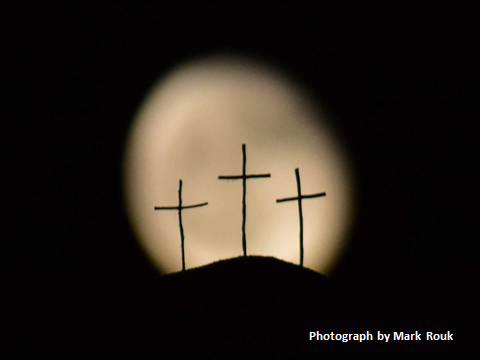
Photograph by Mark Rouk, Oologah, Oklahoma


God’s OK with Exuberant Angels

Christmas is full of surprises—those little unexpected moments which delight our hearts and fill our souls to full. It happened a few nights ago at my grandchildren’s Christmas program. Parents and grandparents watched their little ones pull off a spectacular rendition of Jesus’ birth. Every line was not perfectly spoken nor right on cue, but it was magnificent nonetheless.

And the surprise—one little boy (Zane ~ age 5) proved to be a most exuberant entertainer. Dressed in a white tee-shirt, jeans, and a makeshift halo, he stood on the bottom step of the risers that held the angelic choir. This truly adorable angel was poised for a great performance, yet he had one small problem—staying focused. He twitched and twisted with his experiment to see how far it was to the floor below. He swung his left foot off the riser to touch the floor with his tennis shoe; then his right foot—left foot, right foot, over and over it went. Yet, when the choir began to sing another song, he refocused and belted out the words with all his might. A few lines later, his excitement overcame him once again and he amused himself with less important things. The grand finale was his painstaking efforts to pull his arms out of the sleeves of his tee-shirt, leaving us to wonder if the play might end with one half-dressed angel.

The thoughts of this priceless moment bring a smile to my face this morning, yet I wonder if that little boy might reflect us—yes, you and me—during the Christmas season. We know we are supposed to focus on the Greatest Gift Ever Given, yet we get distracted by all the amusing things around us. When something pulls us back to the main thing, we refocus for a time, only to be overcome once again by things of lesser-importance. Like Zane, we do it over and over.

No doubt that little fellow brought delight to the heart of every onlooker, but I believe he also brought delight to the heart of God. Exuberance, energy, excitement—they’re simply part of being a little boy who is cherished and enjoyed. And so are we—cherished and enjoyed by our Heavenly Father. He knows that our exuberance, our energy and our excitement are simply part of being His child—created to live life to the full, to experiment with who we are and what we can do. Perhaps one day we’ll get it right—but until then, here’s a little advice using a few borrowed words from Luke’s account of the original spectacular event that might help us stay focused on the main thing:

In this season of celebration, remember that Jesus coming to earth was indeed good tidings of great joy to all people. So come with haste and find the Savior, glorify and praise God for what is seen and heard, and then go tell everyone what great things God has done. When the hype is over, just ponder all these amazing things throughout the coming New Year. Oh, and don’t forget to look for those little surprises along the way. Christmas is full of them!

 little-lamb

Merry Christmas to all, Janie Kellogg

Savior? Yes ~ Lord? Not so much

Titles—some people have them; others want them. They denote a level of education, position, military rank, political attainment, great achievement, or even a status symbol linking us to some elitist club. But regardless of their origin, they tell us something about the person who holds them.


In various scriptures, Jesus is called Lord and Savior—titles with rich meaning. The Apostle Peter encouraged Christians to “grow in grace and in the knowledge of our Lord and Savior Jesus Christ.”1 One thing is certain—these two titles tell us much about Jesus; but do we really know what they mean?


I fear many of us use these titles loosely—you know, like calling Jesus both Lord and Savior. Although they are commonly used terms within Christian circles, they hold serious implications and are words not to be taken lightly.


When asked if Jesus is my Savior, I will definitely answer—yes. But to be honest, when asked if He is my Lord, a more truthful answer is—not so much. I’ll explain.


The Bible teaches that any lost soul who puts their faith in the Savior of the world will be saved.2 When Jesus reaches out and pulls a person to safety, He becomes their personal “Savior,” a title He rightly earns. They gladly accept Him in that role and welcome its meaning. After all, who doesn’t want to be rescued and pulled from eternal damnation by a loving Savior? Count me in!


But the title “Lord” is another issue. It is possible that we don’t know the true meaning of the word lord, since it is not often used in our culture. And when the true meaning is revealed, our response might be, “Wait a minute—I didn’t sign up for that!”


Let’s take a look at the master/slave relationship in Biblical times to gain a better understanding. A master (also called lord) purchased or inherited a slave—a person who owned nothing and was forced to work without payment. In other words, the master literally owned the slave’s life. He told the slave what to do, where to go, how to act, when to speak; and the slave was expected to do so with absolute obedience.


Obviously, that was long before anyone knew about personal freedoms—such as the right to life, liberty and the pursuit of happiness. Yet, the Bible clearly states this same condition for all followers of Jesus: “You are not your own; you were bought with a price.”3 That’s right—Christians do not belong to themselves, but are owned by God! We were bought with the blood of the crucified Christ. Scripture clearly teaches that His death paid the ransom to free us from sin.4


Because Jesus Christ is both Lord and Savior, when we accept Him as our “Savior,” we also accept Him as our “Lord.” Yet, I believe few Christians grasp the role of Jesus as the Lord of their lives. We may call Him Lord in theory, but we clearly do not adhere to a slave’s life—being told what to do, where to go, how to act, when to speak; and we are oblivious to the idea of absolute obedience.


Have you ever wondered who Jesus might be talking to when He asks: “Why do you call me ‘Lord, Lord,’ and do not do what I say?”5


Amy Carmichael wrote: “Sooner or later every child of the Father, every servant of the heavenly Master, has to learn that he is not here to do as he likes, but as the Lord commands.”6


There is much to explore on this subject of Jesus being our own personal Lord. His Lordship is a key component of this journey we are making together. Many treasures await us up ahead, so buckle your seatbelts and hang on!


My goal, when asked if Jesus is my Savior and Lord, is to be able to answer truthfully: Yes! Yes! How about you? ~ Janie Kellogg


12 Peter 3:18, 2Romans 10:13; 31 Corinthians 6:19-20; 4Mark 10:45; 5Luke 6:46 (NIV); 6Amy Carmichael, Whispers of His Power, CLC Publications, 1982, July 29.