Tag Archives: Tragedy

SOMETIMES I THINK LIFE IS WONDERFUL—BUT NOT ALWAYS

Sometimes I think life is wonderful, filled with happiness, love, and blessings too numerous to count. Yet, I continuously hear of tragic events here at home and abroad that mess with my emotions and unfortunately, with my faith. But we must not let that shape our view of life. However, to empathize with the suffering, it often requires that we have experience ourselves. If you haven’t experienced a tragic loss, count yourself fortunate. Two years ago, I published a book about the tragedies in my life. How about you? Have you experienced a tragic event that messed with your emotions and your faith, as well? 

A few weeks ago, I received another book review on my book, THERE IS LIFE AFTER TRAGEDY. It was a review by Premium US Review, and they have now recommended my book. I am sharing a paragraph from that review below. It starts with these words: “This is a book about the power of God to lift one out of the depths of despair.” If that describes you or someone you know, I encourage you to check out my book. The review also states that “Kellogg’s memoir is a fine addition to Christian literature.” Perhaps it could be a fit for your own library.     

PREMIUM US REVIEW: “This is a book about the power of God to lift one out of the depths of despair. Decidedly Christian, the author includes biblical scriptures and motivational quotes from Christian writers that have affected her and helped her overcome the personal trials of her life. Its tone is heartfelt and conversational, pulling the reader into Kellogg’s discovery of the long-held secret of the family’s tragedy. Kellogg offers advice on how to overcome one’s own tragedies through relying on God. Though she writes from a Christian perspective, those of all beliefs will encounter an intriguing and emotional read that will long be in their memories. The author is steadfast in her Christian belief and her faith in a God who desires to heal those who are suffering and can indeed do so. Kellogg’s memoir is a fine addition to Christian literature as well as a wonderful gift to future generations of her own family.”

THERE IS LIFE AFTER TRAGEDY is available at Amazon and all major book retailers. It can also be purchased on my website at http://www.sarahjanekellogg.com. If you are interested, the book also has a Bible Study Guide found on my Website that can be printed and used along with the book. To view the Study Guide, look in the Category section on the lefthand side of the home screen, and then for Bible Studies – There is Life After Tragedy. There you will find 14 posts. The first study guide was the first one posted, so you will need to go down to the beginning post, and then move up from there.

STUDY GUIDE FOR CHAPTER 10 ~ THE TRIUMPH

A note from the author: You will find this chapter packed to the brim with powerful statements. In fact, it could be the most impactful and revealing chapter in my book. How fitting it is to be called “The Triumph!” Don’t dare to miss its message. ~ Sarah Jane

1.  Tragedy Demands A Triumph

If there was “the tragedy” that happened in my family (and there was), then there also has to be “the triumph,” or else the word “the” is misleading. The title alone leads us to believe that triumph is possible. But it was not only possible—it became a reality.

Perhaps triumph can be gained only by those who make it theirs—those who claim it and possess it. But before we come to any conclusions, let’s look at where this word triumph is used in the Bible.

2 Corinthians 2:14 (NKJV) ~ Now thanks be to God who always leads us in triumph in Christ, and through us diffuses the fragrance of His knowledge in every place.

Did you catch that—the part about God always leading us in triumph in Christ?” And just where might God be leading us to? Let’s try another one of the Apostle Paul’s famous statements for the answer.

1 Corinthians 15:55-57 (NKJV) “O Death, where is your sting? O Hades, where is your victory?” 56 The sting of death is sin, and the strength of sin is the law. 57 But thanks be to God, who gives us the victory through our Lord Jesus Christ.

Here we see God as the Giver of victory—which sounds to me like a first cousin to the word triumph—and it is given to us through Jesus. Let’s check one more verse.

Romans 8:37 (NKJV) ~ Yet in all these things we are more than conquerors through Him who loved us.

Now let’s gather up the most powerful words from these three verses: “leads us in triumph,” “gives us the victory,” and calls us “more than conquerors.” These are all promises of where God leads us, what God gave us, and what God calls us through His Son, Jesus Christ! To condense it even further, in God’s eyes we are seen as: triumphant, victorious conquerors! WOW! Since they are already given, that means we already have them. They are ours for the taking! So of course there is “The Triumph” in our story.

Since I am on a wordsmithing roll, I’m going to take it yet another step: There is not only life after tragedy, there is life after your tragedy. There is also triumph after your tragedy, and victory after your tragedy. Therefore, you are a triumphant, victorious conqueror after your tragedy! Hallelujah!

2. A Deeper Cause

You will find this sentence on page 86 of my book: “Our healing has a greater purpose than to simply stop our pain.” Doctors tell us that pain is a good thing. Why? Because pain tells us that something in our body isn’t normal.

God allows pain in our lives for the same purpose—most generally to point our focus to eternal matters. What He cares most about us is our souls. I suspect that most of us—or ALL of us—can say that pain in our bodies or hearts have been helpful to God in getting our attention. In short, God is more interested in where we will spend eternity than in our comfort here on earth.

Pain can cause us to turn to God—actually run to God—in desperation. When we finally turn to Him spiritually, our pain level will begin to subside because He is the Healer of the whole person—body, soul and spirit. It is in turning to God to heal our lives both inside and out, that we discover the pathway to wholeness and freedom from our pain.

Have you (or someone you know) suffered from a great loss, and their inward pain of heart and soul led them to turn to God? ___________

Did you (or they) find freedom from pain? ________________ Briefly describe that story.

__________________________________________________________________

__________________________________________________________________

__________________________________________________________________

3.  Is a Comeback Possible for You?

One of the emotions I remember so well after the loss of my husband was the feeling of hopelessness that a comeback would never happen for me. Can you relate? __________ This next statement is one of those powerful truths from that chapter in my book. Read it carefully.

“How do deeply wounded people make a comeback? They do it one step at a time, with the help of their Creator.”

To make a comeback, there are necessary steps we must take, even if we don’t feel like it. First of all, we have to believe that triumph can be ours. If I had never taken steps to encourage my faith that I could make a comeback, triumph would not have been mine. Here are some things we can do to start the process of coming back from loss.

1) We get out of bed every day to face our new and different world.

2) We put one foot in front of the other to propel ourselves forward.

3) We have to make a conscious effort to stop listening to the lies of the enemy; in fact, you may have to change friends. See if you can add more to my list:

__________________________________________________________________

__________________________________________________________________

__________________________________________________________________

I learned from my own personal grief that recovery is always a choice. Do you believe this? ____________ Why or why not?

__________________________________________________________________

__________________________________________________________________

Grief is a healthy response to the hard places in life. We need to grieve in order to properly process our loss. No one should be criticized about the way they grieve or how long they grieve. Grief is a personal choice. Likewise, recovery is a choice.

Do you know someone who has not turned loose of grief? ______________ Do you think their choice has been a good one? ______________ Why or why not?

__________________________________________________________________

__________________________________________________________________

4.  What Can We Do with Our Scars?

Another thing that lingers long even after we recover is our scars. Scars are a clear reminder of our loss and our pain. Do you see scars as a positive or a negative?

Why?  (This is a matter of personal preference, and neither answer is wrong.)

__________________________________________________________________

__________________________________________________________________

__________________________________________________________________

When I think of scars, I generally think of Jesus’ nail-pierced hands and feet. Would you say that Jesus looks at His scars positively or negatively?

__________________________________________________________________

Do you think Jesus’ scars remind Him of the excruciating pain He experienced while on the cross and says: “You weren’t worth that pain?” ______________

All I can say in response to that question is a great big “NEVER!” Jesus knew the price up front that He would have to pay in order to save us from the eternal penalty of death, and He chose to do it anyway.

I believe when He looks at His own scars, He thinks that you—every last one of you—were worth every ounce of pain He felt and every drop of blood He shed. I believe He smiles at His scars as He thinks of us—His rescued brothers and sisters!

5. Who Makes the Decision?

In my book I describe the life of a man named Charles Krauthammer. For years Charles was a news commentator on the Fox News Channel and sat at the news desk in a wheelchair. One would hardly notice his chair, unless you knew his story. While attending college, Charles was injured in a diving accident. Yet, in spite of his disabilities, he decided to finish college and then went on to become a doctor. Later, he chose to enter journalism where he won a Pulitzer Prize for his work. A few days before Charles died in 2018, he wrote to his friends and colleagues that he had no regrets—because he had lived the life he intended.

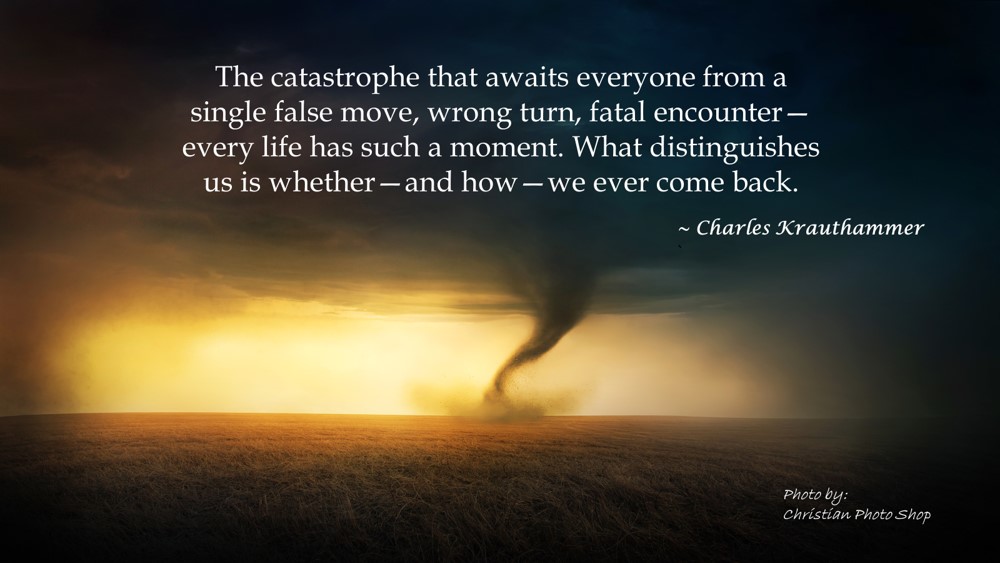
Without a doubt, Charles Krauthammer made a decision after suffering a life-altering tragedy—to live his life just as if the tragedy never happened. Here is a quote from this remarkable man, that gives us pause: “The catastrophe that awaits everyone from a single false move, wrong turn, fatal encounter—every life has such a moment. What distinguishes us is whether—and how—we ever come back.”

What about us? Have we made a decision to live as if our tragedy never happened? Have we decided to come back from tragedy and move forward? If not, then it seems to me that we have a decision to make, and no one can make it for us. I believe God sees our hearts and longs to help us do that very thing. He is fully committed to helping us do it—but He can’t and He won’t without our decision. What is your answer to one of the most important questions in your entire life? Write your thoughts, feelings, and commitments below.

__________________________________________________________________

__________________________________________________________________

__________________________________________________________________

Prayer: Dear Heavenly Father, I have been dragging my feet on getting back to living. I have felt sorry for myself; blamed others; maybe even you because my life has been altered. I want to move forward, but I totally need your help to do it. I now ask for your help, and I commit to taking whatever steps I need to take. Today is my day to start living again. In Jesus’ powerful Name I pray. Amen.

STUDY GUIDE FOR CHAPTER 6 ~ THE AFTERMATH

1.  What Does Aftermath Mean Anyway?

Up until this one, the previous lessons have flowed easily from my heart. I did not have to search for ideas, content, or questions that brought rhyme and reason to the topic to be discussed. They were just there—right on the tips of my fingers as I typed. So why is this chapter different? Could it be because none of us want to talk about painful things?

In my book, There Is Life after Tragedy, I started Chapter 6 with the following words: “Aftermath seems like an ugly word to me….” If you have suffered a great loss of life, you know exactly why aftermath is an ugly word. For those who have endured one or more deaths at the same time, the ugliness is multiplied many times over. Tragedy can exponentially increase the pain and heartbreak as the reality of the loss soaks into our hearts and minds. In short, it is indeed ugly.

Do you know any other descriptive words that clearly depict aftermath?

__________________________________________________________________

__________________________________________________________________

Although aftermath is ugly, it is also normal and necessary. We will all have to deal with aftermath someday, even for the loss of a loved one who dies of old age. Why? Because loss of life always forces us to face the “What’s next for me?” question. The many changes and challenges that lie ahead make up a large portion of the aftermath. What used to be is no longer. Who used to be with us is not here anymore. In fact, for many people, everything changes.

On page 46 of my book, I listed fifteen unpleasant things that humans have to deal with that create an aftermath in our lives. Things such as death, accidents, divorce, coronavirus, etc. However, I have come to realize that the list is not a complete list, and I’m not sure there is a complete list. Perhaps that is why the last line of my list says: “after, after, after….”

What gut-wrenching life events could you add to my list?

__________________________________________________________________

__________________________________________________________________

The Oxford Dictionary defines aftermath as “consequences of a significant unpleasant event.” While we may not classify all losses as tragic, we must understand that tragedy comes in many shapes and sizes. Sometimes we have to clean up a mess someone else made, and sometimes we have to clean up our own mess. Regardless, we all need one thing in order to survive the aftermath—God!

2.  We Are Never Alone

God never expects His children to go through any part of life by ourselves. We always have His Presence with us. We always have His Peace inside us. We always have His Grace covering us. If we have asked Jesus to save us and send the Holy Spirit to come and live in our hearts, then He did both of those things. The truth is that we are truly never alone! Our challenge is to learn how to tap into that Source that indwells all believers.

To get over this mountain called aftermath, we simply must lean on God’s promises to get us there. He means what He says, and we can trust what He says in the darkest hours of life. If He fails us there, how can we trust Him with our eternal destiny? It is a rock-solid, iron-clad truth that God’s Word never fails!

What can you do right now to get that one issue settled in your heart and mind once and for all?

__________________________________________________________________

__________________________________________________________________

For our scripture reading for this lesson, I want us to look at Isaiah 43:1-3a. I have included it below from the New Living Translation.

1 But now, O Jacob, listen to the Lord who created you. O Israel, the one who formed you says, “Do not be afraid, for I have ransomed you. I have called you by name; you are mine.

2 When you go through deep waters, I will be with you. When you go through rivers of difficulty, you will not drown. When you walk through the fire of oppression, you will not be burned up; the flames will not consume you.

3 For I am the Lord, your God, the Holy One of Israel, your Savior.

If we read Isaiah’s life story, we would realize that he had firsthand knowledge about deep waters, rivers of difficulty, and the fires of oppression. He was certainly validated to write about such hard things. His words of comfort to us in these verses are encouraging to say the least. The truth is that Isaiah knew these statements by experience because he had trusted in God for survival and God did not fail him.

Have you ever had a situation in your life when you trusted in God and then experienced His divine help where you were not afraid, not alone, didn’t drown, or were not consumed by your trials? Those kinds of experiences are truly a hallmark of our faith in a Faithful God. Briefly list one or more those experiences below.

_________________________________________________________________

_________________________________________________________________

3. What’s So Amazing About Grace?

Obviously, I believe that God’s grace is amazing since I donated over two full pages to that subject in my book. Actually, grace is a big deal. Without it we would all be in big trouble—in this world and in eternity. Ephesians 2:8-9 says, “For by grace are you saved through faith; and that not of yourselves; it is the gift of God: not of works, lest any man should boast.”

Grace is a gift God has chosen to give to His children. We cannot earn it, buy it, steal it, borrow it, or con God out of it. All we can do is ask for it, believe He says “yes” to our prayers, receive it by faith, and testify to what He has given to us. In real terms, God gives us grace because He wants to.

When it comes to receiving God’s help to survive an aftermath, our greatest ally is grace. It is freely supplied to those who ask Him for it. You may be thinking—but how do we receive this grace; how do we make it ours? The answer is clear: we receive grace exactly the same way we got saved—by faith! We will receive grace through faith, making faith the vehicle by which grace becomes a reality in our lives.

We’ve already settled the fact that God cannot lie. Since God is incapable of breaking a promise, then any disconnect must be on our end. When we think He is silent, think again. God doesn’t have to use words—His presence, peace, grace, and love all speak volumes to our hurting souls. So, in those times when it seems as though God is silent, we must use our faith to stir our faith!

But how do we use our faith to stir our faith? It’s basically quite simple. If you are a born-again believer is Jesus Christ, you only got there one way—by faith, as discussed above in Ephesians 2:8-9. Read this next sentence very carefully: you already have faith inside of you. It just needs to be activated once again—stirred up, if you will. You don’t need to start asking God for something you already have. We simply recall or bring to our remembrance the times He has blessed us, answered our prayers, and showed up just in time. Our trust in Him is what God responds to—not begging! Tell Him you trust Him, and mean it. Practice doing what you did at least once in your life. Then practice it again, and watch Him smile down some grace on you, along with hope, comfort and strength in your dark moments. It is true—grace is amazing!

Think of a current issue that is difficult for you to manage. Why not ask God for His amazing grace to help you get through this time? Briefly identify it here, and later come back and record what God did for you.

__________________________________________________________________

__________________________________________________________________

Record follow up here:

__________________________________________________________________

__________________________________________________________________

If you have never asked Jesus to forgive you for your sins and give you eternal life, why not ask Him right now? He is always ready and willing to answer that prayer, and He will come into your heart and save you. Next, share your decision with another Christian. You can also leave me a comment in the comment section, and I will respond to you.

Prayer: Heavenly Father, I am learning just how much I need you, and that you are more than willing to help me through the difficult times. I am grateful for your faithfulness and no matter how hard life looks, I am never alone and your amazing grace is always available to me. With every trial that comes my way, my faith is growing and getting stronger. I long to trust you more. Help me remember to ask for your help, believe I will receive it, and give you thanks in everything. In Jesus’ Name I pray. Amen. 

STUDY GUIDE FOR CHAPTER 1 ~ The Tragedy

A note from the author: Welcome to the Study Guide for Chapter 1. We all have a Chapter 1 in our lives that reflects where we are now—the starting point. This Chapter 1 is tragic and yours may be as well. But there are many chapters ahead filled with God’s stories and promises to us. I am so excited that you are joining us as we discover God’s pathway to healing. ~ Sarah Jane

1.  Bad Things Do Happen to Good People

There is one fact in life that no one can deny: Bad things do happen to good people. It has been happening since the first two sibling lived on planet earth, and it continues to this day. The weapons of our day may be different from the one Cain used to kill his brother, Abel, but the result was the same—death. It happened in broad daylight, big screen, technicolor, and as always, with devastating results. The aftermath for the first two parents on earth would have been unimaginable. It would have likely taken them years to recover. How could this horrific tragedy have occurred in the first five pages of the Bible? Let’s read Genesis 4:1-16.

In those Bible verses, did you see any clues as to what may have caused this tragedy? If so, list them here:

__________________________________________________________________

__________________________________________________________________

If you spotted jealousy, self-pity and anger, you saw the same things I saw. I am sure there are more, but let’s focus on these three. Do you know of any situations (family, friends, or co-workers) where any of these three factors exist? Because our current culture is very different than it was thousands of years ago, today we can add things like drug abuse and social media influence to the list of probable causes. If you know of others, list them here:

__________________________________________________________________

__________________________________________________________________

2.  The Elephant in the Room

Perhaps the hardest of all topics to discuss openly is mental illness. I did some research on that topic to include in my book, but was discouraged by my first editor. Apparently, many authors have already addressed it. However, I am including some of what I wrote in the paragraph below.

The most common solution for mental patients in the 1940s was to place the individual in a mental institution; therefore, my uncle was taken to a state mental facility in Abilene, Texas. Conditions inside mental facilities in general were not widely known by the public until the 1970s. Geraldo Rivera, an investigative reporter for WABC-TV in New York, secretly found a way to go behind the walls of the Willowbrook State School for the developmentally disabled on Staten Island. His report, which aired in 1972, told of “a host of deplorable conditions, including overcrowding, inadequate sanitary facilities, and physical and sexual abuse of residents by members of the school’s staff.” He reported the ratio of one worker per fifty patients in some cases, and no provisions to separate those with uncontrolled seizures from those with mental illness. The horror stories that emerged from Rivera’s documentary forever changed the way Americans would view mental health institutions. There is no intent to associate what Rivera found at Willowbrook with the facility in Abilene, Texas. It is included simply to point out that little had been done in that era to meet the needs of mentally-challenged patients. It seems ironic today, over 50 years since Rivera’s documentary on mental illness, that little progress has been made to properly diagnosis, treat, and provide for the vast array of needs for these patients. Real solutions seem to elude us.

Is it any wonder that family members do not want to place a loved one in an institution, that is, if any institutions remain after our government began closing them down in the 1980s? Today, many of these individuals are living among the homeless population on the streets of our cities across America.

Do you know someone personally who deals with a mentally-challenged family member? _______ If so, are you aware of the huge challenge to provide safe and manageable care for their loved one? _________ Do you know of solutions that might benefit other families? If so, list them here: _________________________________________________________________

_________________________________________________________________

3.  Weighty Words

In my book, I quoted my grandmother’s words about her son: “I’d rather be dead than lock him away somewhere.” Not long after she spoke those weighty words—almost prophetically—my family endured a tragedy with devastating results. Weighty means heavy, substantial, or bulky—basically, they are difficult to handle. Can you or someone you know relate to my grandmother’s mindset? _________

Every family that experiences a tragedy will face excruciating pain. There is no way around it. They will eventually discover that the very core of their being has been wounded. I chose the subtitle for my book, God’s Pathway to Healing for Deeply Wounded Souls, because it is something that I personally experienced. The only genuine pathway to healing for deeply wounded people is the one that God offers. He knows us like no one else know us, and He loves us unconditionally. He is the Great Physician and can perfectly heal our wounds. This subject will be discussed at length in future chapters.

Do you or someone you know have a deeply wounded soul due to a tragedy?  __________ Do you believe God has provided a pathway to healing for every wounded person? _______Why or why not?

__________________________________________________________________

__________________________________________________________________

4.  Memories That Hurt

I have a vivid memory of the middle-of-the-night ambulance ride from my home to the hospital 25 miles away when my husband suffered a stroke. We had been fighting his cancer for nearly two years, and this was just one more thing to check off the list of awful things that would eventually happen to him. The doctors had told us what to expect, so you might think I was prepared—but not so.

I felt numb inside as I sat in silence in the front of the ambulance. I stared out the window at the red and white flashing lights bouncing off the tree tops. It seemed as though our whole lives raced through my mind as I began to process that the end was near for my husband’s earthly life. He slipped from our lives three weeks later. Yet, the nightmare for me was just beginning.

How about you? Do you have a memory that hurts? While mine is now over 20 years old, I still remember it clearly. Perhaps your memory is fresh and your pain unbearable. We will discuss that pain in Chapter 9, but know that God has never left you alone to deal with your pain. Make a note of your similar memory below and we will refer back to it later.

__________________________________________________________________

__________________________________________________________________

5.  Cause and Effect Syndrome

Why is it that we humans always want someone to blame for our troubles? Is it so we can have an object on which to unleash our pain? Our anger? It is much harder to simply accept that God allowed this to happen. The basic Christian belief is that He is a God of love and truly loves me; therefore, He would not have allowed this to happen to me. So apparently someone else caused it. Right? Just let me scream at the guilty party, and my pain will go away! Can you relate to any of those feelings? __________ Briefly describe that situation?

__________________________________________________________________

__________________________________________________________________

However, in many cases there is often no one to blame. We simply (pardon my overuse of the word simply, since there’s nothing simple about any of this) have to find our way through the maze of emotions while believing God can still be trusted. So much of the pain we deal with in loss is doubting God’s love for us. Recovery requires walking by faith in His goodness and not walking away from Him.

Running from God is never a good idea. When my current husband went through the loss of his first wife to cancer, he struggled with this very thing. At one point he thought he might just walk away from God. That is, until the Lord spoke to him and said, “Let me know how that works out for you.” He vividly recalls the Lord bringing to his mind the story in John 6:68 where Jesus asked the twelve disciples if they were going to leave him also. Peter answered, “Lord, to whom shall we go? You alone have the words of eternal life.” Have you had times in your life when you felt like walking away from God? If so, when?

__________________________________________________________________

What did you do—stay or walk away? __________________________

God is always the right place for us to turn to, reach for, call upon, and trust in. He cannot and will not fail to comfort His children. We will learn much about His pathway to healing for our wounded souls in future chapters.

Prayer: Heavenly Father, it is comforting to think that You already know about my circumstances, my struggles, and my deepest wounds. It is possible that I am guilty of blaming others for my pain. I definitely have memories that hurt. I have even tried to run away from it all, including you. Yet, I am still wounded and I need your help. Thank you for finding me right where I am. I ask you show me the pathway to healing. In Jesus’ Name I pray. Amen.

BOOKS BY SARAH JANE KELLOGG

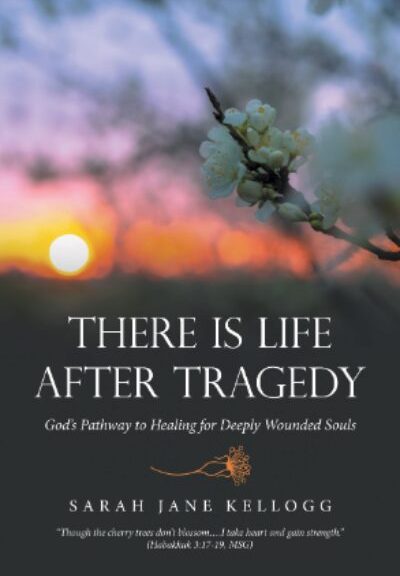
There Is Life After Tragedy

Sarah Jane published her first book, There Is Life after Tragedy, in August of 2022. It is a compelling story about her family’s tragedy that occurred before she was born. She unpacks the painful memories of her three older cousins, interwoven with her own personal losses in life, to create a powerful account of how believers can find God’s pathway to healing for their deeply wounded souls. It is available in softcover for $13.95 with free shipping from her publisher, WestBow Press, at http://www.sarahjanekellogg.com and at most major book retailers.

Sarah Jane is excited to share with you the industry-trusted KIRKUS REVIEW she recently received about her book. There is a short excerpt from the review below, but the review in its entirety can be read at http://www.kirkusreviews.com where you can search by book title or author’s name.

“Kellogg’s book is bracing and thoughtful; she avoids platitudes and self-soothing reductions. With an impressive combination of subtle intelligence and moral courage, she accepts the extraordinary challenges of life and limns a lucid defense of Christianity as a response to life’s trials. This is an unusually moving book, unflinching and honest.”

~Kirkus Indie – A review service from Kirkus Reviews

Any comments you may wish to leave on the Kirkus Reviews website about her book and/or their review will be greatly appreciated.

Future Books by Sarah Jane

Sarah Jane is currently writing her second book, a book that you will not want to live without. Future information will be forthcoming as it is available!

*Note: If you would like to receive relative information concerning this book and any future books by Sarah Jane, please subscribe to her blog, Treasure In Earthen Vessels, at http://www.treasureinearthenvessels.net. The subscribe option is located in the black area on the lefthand side of the screen. This will allow you to receive all of her post in your email inbox.