Tag Archives: bible

STUDY GUIDE FOR CHAPTER 4 ~ THE FAMILY I KNEW

A note from the author: This Study Guide will take us to new places we may have never thought about going. We will likely learn new things about ourselves, but even more about our family. We all have one; and whether we like them or not, we are like them in many ways. You will also find some ideas on how to mend the fences with your people. So, let’s get going! ~Sarah Jane

1.  Who Are Our People?

We all have what we call our people, our tribe, or our clan. The most common term is simply our relatives, for those with whom we are biologically related. We also know this group of human beings as kinfolks, because we are kin by blood. We share many things with these individuals—mainly, but certainly not limited to, the blood that runs through our veins. We also share genetics, physical features, good or not-so-good looks, and temperaments. Oh, but it goes even further than that—there are talents such as being able to sing, dance or play an instrument that can be traced back to our kinfolks. Equally true, the qualities of high intelligence or exceptional athletic capabilities also run in families. Further still, we often hold the same religious views, political views, and societal views.

Whether we like our kinfolks or not, we are like them in many ways. There were several things I discovered about my family during the data gathering process for my book that I did not know beforehand. I did not know that almost every member of my dad’s family played a musical instrument. All I knew was that I loved music with every fiber of my being. I guess I thought everybody loved music as much as I did—after all, what’s not to love about music?

Is there something about YOU (a trait, skill or desire) that you wonder where in the world it came from? __________ Describe it below.

__________________________________________________________________

I must ask: Have you looked around at your kinfolks? __________________________________________________________________

2.  Childhood Memories

Childhood memories are something we all have. I have wonderful memories as a child growing up around my people, and I cherish them even more today now that I’ve written about them. But good or bad, our memories are what they are. If yours are not so good, I encourage you to face them with courage. You can’t change your memories, but by addressing them, you may see some things differently now that you are an adult.

Without disclosing any facts about your hurtful memories, make a note here of a memory you possibly need to face.

__________________________________________________________________

__________________________________________________________________

Some people keep bad memories suppressed for years. That is generally not a good idea as it can eventually lead to mental anguish that pushes individuals to carry out revenge on family members, co-workers, and even innocent people. I recommend getting professional help, be it through a counselor, pastor, or friend. Life is too short not to live it to the fullest. God wants His children to live in total freedom from our sin, our past, and our bad memories. Let’s look at two chain-breaking statements Jesus made while He was on earth.

John 8:32 “And you shall know the truth, and the truth shall make you free.”

Jesus deeply cares about our freedom. He knows that truth has inherent qualities when brought into the light of His love that can bring freedom to our lives. It is knowledge of the truth that breaks off our chains. Listening to and believing lies does the exact opposite.

John 8:36 “Therefore if the Son makes you free, you shall be free indeed.”

Here Jesus heralds Himself as the Master over bondages, chains, addictions, lies, deceit, half-truths or any other life-suffocating obstacles. And He announces that if He sets us free from any of those relentless monsters, we will truly be free!

Rewrite these two scriptures and insert the pronouns I and me in the place of you.

__________________________________________________________________

__________________________________________________________________

__________________________________________________________________

__________________________________________________________________

3.  Strained Relationships ~ What Can We Do?

For more than four decades, I have been friends with a family of five daughters. I have watched them live in close proximity to one another and their parents. Not once have I known of a dispute among any of them, nor one bad word spoken about another. They live life together, and some have worked together. They share the responsibility of taking care of elderly parents and do it well. They truly earn a five-star rating in my mind, and they are greatly admired as a family by anyone who knows them. But unfortunately, they are not the norm. It isn’t uncommon to have issues with our people. So, what can we do about our strained relationships?

While some bad behaviors are intentional, a large part of family issues are caused by misunderstandings. The enemy of our souls continually spins and spreads half-truths. If not dealt with, these misunderstandings can change a molehill into a mountain. The longer they are allowed to go unchecked, the bigger the issue becomes. It is often necessary to “eat crow” to get some issues resolved; yet I believe in most cases our people are worth the effort to restore the relationship.

If you think your family’s issues are over-the-top, think again. Let’s look at several examples of family issues from the Bible to see if they were all perfect people with perfect relationships.

Cain and Abel, sons of Adam and Eve and the first two siblings on earth: Cain was jealous of Abel, so he killed him. Not so good, huh? (Genesis 4:1-8)

Isaac and Ishmael, the half-brothers of Abraham: Descendants of both of these men claim they are from the son of promise that God gave to Abraham. This battle still rages today in the Middle East. (Genesis 15:1-8; Chapters 16; 17; and 21:1-21)

Jacob and Esau, the twin brothers of Isaac and Rebecca: Jacob, the younger brother, stole his older brother’s birthright. That is a really big deal in Jewish families. (Genesis 25:19-34)

Joseph and his 11 brothers, the sons of Jacob: The brothers were jealous of Joseph because he was their father’s favorite, so they sold him into slavery. The twelve sons of Jacob were born to four different mothers. Want to talk about a challenge? (Genesis 37:1-36)

These examples are from just the first book of the Bible! But in case you thought your family situation is the absolute worst, these stories should help put things into perspective. Dysfunctional families have been around since the get-go!

4.  How Do We Move Toward Reconciliation?

Sections A through D below are good ideas that could help you resolve some issues with family members. They are certainly not to replace professional help, but rather to provide some simple keys that work for many people. The actual keys are underlined.

A.  The first key is that you must desire to fix things with your family member(s). You will have to make the first move—through prayer and self-reflection. Ask yourself, “Why do I want to fix this?” Record your reasons below.

__________________________________________________________________

__________________________________________________________________

B.  If you truly want to reconcile, the next two keys are: forgiveness is essential, and accusations (blame) must stop. Determine in your heart now if you can do these two things. What role does forgiveness play here? What about blame?

__________________________________________________________________

__________________________________________________________________

C.  Be willing to meet them half-way. In so doing, you are accepting that part of the problem could be you. Why is this step important?

__________________________________________________________________

__________________________________________________________________

D.  Move forward with caution, respect, kindness, and love. Simple kindness may be the most effective key you use. Remember that love never fails—and it will not fail you or fail them. Which of these four words can you see yourself using? __________________________________________________________________

__________________________________________________________________

E.  Everybody has a perspective and it could be different than yours. Everyone is important to God and is one of His offspring. Every person is worthy of mercy and grace, since Jesus died for all of us. Why must we extend mercy and grace to those who don’t deserve it?

__________________________________________________________________

__________________________________________________________________

These simple steps are not a fix-all by any means, but what if God restores a relationship that has been broken for half a lifetime? Believe now that “He is able to do exceedingly abundantly above all that we ask or think!” (Ephesians 3:20)

Please understand that the good ideas and simple keys above are presented as possible solutions for typical and ordinary misunderstandings and behaviors in families. They are not offered as a solution for every offense, especially in the case of harmful actions like sexual abuse. Reconciliation may not be possible in some cases, and those kinds of offenses need and deserve professional counseling.

I have covered many thoughts and ideas to help you deal with your family matters. I pray in the coming days that the Holy Spirit will speak to your heart which ones can help you find healing, health, and wholeness in everything family!

Prayer: Heavenly Father, I acknowledge that my childhood memories are certainly not like a fairytale. In fact, there are some issues with my kinfolks that I would like to reconcile. I have no idea how it will be received, but thank you for bringing me to this point of acknowledgement. Oh God, grant me the serenity to accept the things I cannot fix, the courage to fix the things I can, and the wisdom to know the difference.1 Please help me to honor You in whatever I do with this new insight. In Jesus’ Name I pray. Amen.

1 The Serenity Prayer, modified by author
STUDY GUIDE FOR CHAPTER 3 ~ THE HISTORY

A note from the author: The lesson for Chapter 3 may seem a bit off-target since it focuses on things that happened long ago—better known as history. You may ask, why do I care? Or why should I care? But you will soon discover that our history is very much a part of who we are today. So, dive in and see where God takes you! ~Sarah Jane

1.  History Matters to Us

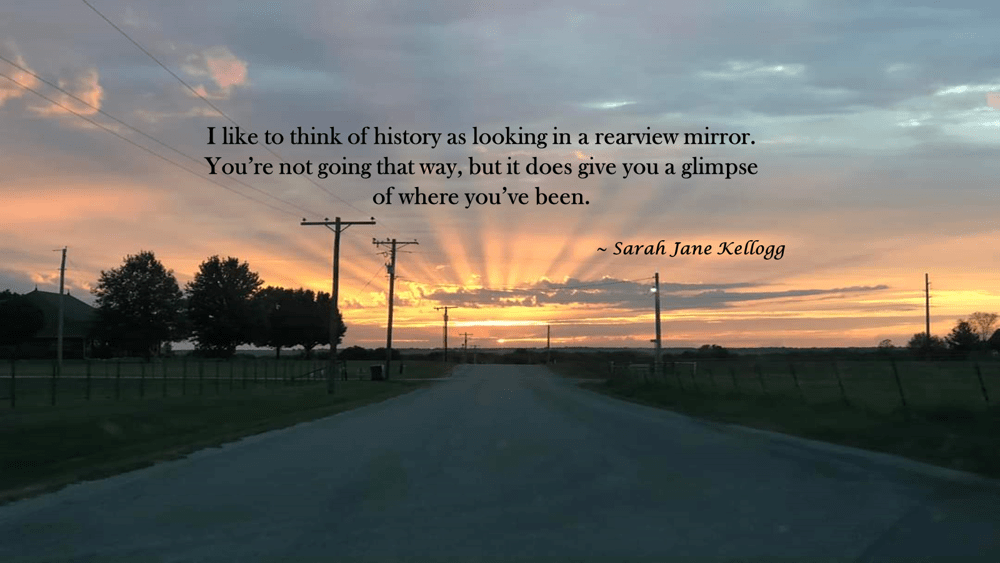
In my book, There Is Life after Tragedy, I described history like this: “I like to think of history as looking in a rearview mirror. You’re not going that way, but it does give you a small glimpse of where you’ve been.” History matters to us—or at least it should. Yet, I know there are many who would rather not know their family history just because it feels tainted or spoiled, and you’re thinking why not just leave that stone unturned. That may well be an accurate description, but it also may not be. The truth is that you will never know for certain unless you try to unpack your own history. Only you can make that decision.  

Just in case you think you might like to take a peek at what’s out there about your family, there are some things you may want to consider. It is sad but true that many of us seem not to care about our history until it is too late. Oft times family members leave us way to early, and we are left with a thousand questions we intended to ask them someday. I’ve seen it happen many times. So, take my advice—since it’s free—and get your courage up and ask them now. In this lesson, I will give you some ideas on how to go about it, some dos and don’ts, and as always, some valuable treasures to look for in the process.

Do you have one or more older family members whose life or memory is slipping away? ________ If so, list them below:

_________________________________________________________________

_________________________________________________________________

_________________________________________________________________

2.  History Matters to God

One good reason for gathering our history is because history matters to God. You may ask why does it matter to Him, and how do I know that it does? As usual, the best resource we have about our God and His ways are His written Word. We’re going to start by looking at the Index in our Bible. As I point out various things about the Old and New Testaments, look down the list of books and locate what I have mentioned.

At the beginning of the Bible, we encounter the first five books that are accredited to Moses as the author. While some theologians question the bases of this accreditation, it has never been proven one way or the other. One commentary said that Moses was more of a recorder than an author; but regardless, God told someone in His family to write down what happened in the beginning. And aren’t we glad He did?

Many books in the Old Testament are named after the author, such as Joshua, Samuel, Nehemiah, Isaiah, Jeremiah, Ezekiel, and Habakkuk. The point is that someone close up and personal to these stories had an inner leading to write down the events.

The New Testament books were mostly named after the authors as well, except for some that were named after the recipients of the letters written to them. For example, Romans, 1 & 2 Corinthians, Galatians, Ephesians, and Philippians are what the people were called who lived in the cities of Rome, Corinth, Galatia, Ephesus, and Philippi. Lastly, we are so incredibly blessed to have four authors recording the life of Jesus—Matthew, Mark, Luke, and John. WOW! Different authors, different viewpoints, and different reasons for writing—all things that matter to us as readers.

Several books of the Bible are categorized as prophecy—something to be unveiled at a later time. For instance, in Daniel 12:4 NLT we read these words: “But you, Daniel, keep this prophecy a secret; seal up the book until the time of the end, when many will rush here and there, and knowledge will increase.” Because much of Daniel’s book applies to the times you and I are living in, we can know what was on God’s heart thousands of years ago about us and our day.

In the Book of Revelation, we find an interesting fact about how the person assigned to record something carried out his assignment.

Revelation 1:1-2 NLT “This is a Revelation from Jesus Christ, which God gave him concerning the events that will happen soon. An angel was sent to God’s servant John so that John could share the revelation with God’s other servants. John faithfully reported the word of God and the testimony of Jesus Christ—everything he saw.”

Did you notice the part that basically said, “so that John could share it with others?” God has His servants write things down so His other servants—and that would be us—can read them, too! Clearly, history matters to God.

3.  Make Yourself a Plan

A.  If you want to capture your family’s history, developing a plan would be a wise place to start. Ask yourself what you want to know, why you want to know it, and who might be the best person to ask about it. Be aware that much of your ancestry data may have already been gathered by another family member simply because websites like Ancestory.com have made it easier to do. So, ask questions before you start. You can tap into their findings if you sign up for the same app they used, but the monthly fee eventually gets expensive.

Do you know if a family member has already gathered data on a site like Ancestory.com? _______ If not, who might know?

__________________________________________________________________

B.  Dos and Don’ts: Here are a few tips to keep in mind as you build your plan. When you determine who you would like to interview about your family’s story, pray about it first, and then ask God to give you wisdom and courage to move forward. As you attempt to unpack the story, always be kind, sensitive, and thoughtful because these memories could bring pain to that person. Since I already knew to be careful in gathering information about my family’s tragedy, I continually watched for signs that I was going too far, stepping over the line, or asking pointed questions. I mostly let it flow naturally, and did it ever flow!

C.  One of the questions my cousins had for me was: “What are you going to do with this information?” I was upfront and honest. I told them I planned to post it on my blog and perhaps publish a book. Throughout the process, I kept my cousins informed at every stage of writing, proofreading and publishing. They were allowed to make changes or clarify things I had written. In short, we walked through it together.

4.  Finding Treasures in the Process

One of my fondest memories was an interview with my great aunt, Ruth Bode, two days before her 100th birthday. Ruth was a sister-in-law to my grandfather (who was killed in the tragedy), and she was the last living person of their generation. You will read about this interview in Chapter 5. It holds a special place in my heart as a priceless treasure gleaned from the process of gathering information.

Although this entire chapter is historical, it still made a huge mark on my life. The quote by Priscilla Shirer at the end of Chapter 3 (page 24), spells out our responsibility to the younger generation: “The patterns you set will form a pathway that others will walk.”

To get an idea how someone might feel about being interviewed, let’s fast forward several years and think about the fact that you are now the person sitting in a rocking chair with a throw draped across your lap. Then a young whipper-snapper niece or nephew comes up to you, pulls up a chair, and wants to pick your brain about the past. How would you handle that?

__________________________________________________________________

__________________________________________________________________

Do you feel certain things deserve to remain private?

Yes or No ______________

Why do you feel that way?

__________________________________________________________________

__________________________________________________________________

Do you think the younger generations have a right to know what you know? ___________ Why or why not?

__________________________________________________________________

__________________________________________________________________

These kinds of encounters can turn out good or not-so-good. However, they can also yield treasures that we didn’t know were there. If we use wisdom, we might develop a new relationship with a family member we never dreamed possible. Who knows, they might even change our mind about some mis-information we were told years ago. Whatever we do, we should work towards a positive outcome for everyone involved. And that will honor God.

The best advice I have to give is to use discretion and a great deal of respect for those you want to interview. In reality, they are not obligated to tell you what they know; therefore, be grateful for their willingness to share anything at all. Otherwise, you may come away from the interview with a blank piece of paper. Just saying.

STUDY GUIDE FOR CHAPTER 2 ~ THE GATHERING

A note from the author: You do know that God is always moving us forward in life and in knowing Him—right? It’s a wonderful journey, especially when we anticipate the powerful Holy Spirit working in us. This lesson is packed full of good things—the very things you have been looking for. So, let’s get started! ~ Sarah Jane

1.  Finding a Place of Freedom

To give us a point of reference for this chapter, think about a family secret, situation, or controversy in your own family that has never been discussed in a gathering of family members. But now it is being addressed. Can you for a moment sense the strain on everyone attending? In my book I called it, “opening a can of worms that no one wanted to open.”

Have you ever been a part of such a gathering? ______________

When: __________________________________________________________

Record below what was the subject of your meeting?

__________________________________________________________________

__________________________________________________________________

Perhaps because I was the youngest cousin in the group and I had called the meeting, it felt as though the air was so thick I could slice it with a knife. I was so nervous that I forgot to locate the outline I had carefully prepared to guide me through the meeting. So, I had to wing it. Yet, what happened next was nothing short of a miracle.

If I have one favorite sentence in my entire book, it is the one located at the bottom of Page 15: “It seemed as though a dam had broken and pent-up water gushed forth across a newly opened pathway.”

God was there and He never left. It was God Himself who created that pathway for these cousins to open up their hearts and allow their seventy-year-old pain to find its way to freedom. Let’s be honest: How many of us need for God to show us a pathway to freedom for our pain? Aren’t our tired and weary hearts ready for relief from this heavy load? Answer this question as honestly as possible: Are you now willing to face your pain?  Circle one: I am willing or I am not willing.

2.  How We Cope with Our Pain

When it comes to pain, we humans have a vast array of ways that we cope with it. Here are just some examples.

A. Some people hold on to their pain because they fear letting go of the pain means they didn’t love their lost loved one as much. This approach is very real and active in the lives of many people. Do you know people who have taken this approach to their pain?

______________________________________________________________

B. I have come across people who actually say, “I don’t want to get over this pain, so thank you very much, but I’ll just keep it!” Do you know someone who may not admit this out loud, but their actions seem to support this approach?

________________________________________________________________

C. There are people who have lost a loved one, or lost arms, legs, eyes, etc. in an accident, or are diagnosed with a debilitating disease, and they refuse to let go of their pain because they believe that suffering is their lot in life. Do you know anyone like this and how does it make you feel when you are around them?

__________________________________________________________________

__________________________________________________________________

I am certain there are more approaches to pain than the three mentioned above. Yet the truth of the matter as stated in the Chapter 1 Study Guide is this: God has a pathway for all sufferers to find freedom from their pain.

Freedom from the pain in our wounded and broken hearts can belong to us, but we will likely have to give up something in order to gain that freedom. Here are a few things we might have to turn loose of, but see if you can add others to the list:

1) An unhealthy mindset

2) False teaching

3) Lack of knowledge about God

4) Self-pity

5) ______________________________________________________________

6) ______________________________________________________________

7) ______________________________________________________________

8) ______________________________________________________________

3.  Discovering God’s Pathway to Freedom

Our focus scripture for this lesson is one of the greatest, most powerful, and best loved passages in the entire Bible. Let’s read Luke 4:16-21.

18 “The Spirit of the Lord is upon Me,

Because He has anointed Me

To preach the gospel to the poor;

He has sent Me to heal the brokenhearted,

To proclaim liberty to the captives

And recovery of sight to the blind,

To set at liberty those who are oppressed;

19 To proclaim the acceptable year of the Lord.”

20 Then He closed the book, and gave it back to the attendant and sat down. And the eyes of all who were in the synagogue were fixed on Him. 21 And He began to say to them, “Today this Scripture is fulfilled in your hearing.”

Here we find Jesus at the very onset of His ministry going to the synagogue in His own hometown—Nazareth. He introduced Himself to the audience as being the Messiah and then spelled out for them precisely what He came to earth to do. Can’t you just hear Him declaring to them: “It is done! It has already been accomplished! Today! Now! You don’t have to wait any longer!”

WOW! What mighty and powerful words from the ONE who cannot lie!

4.  Are Jesus’ Words True or Not?

Unquestionably there were people in the synagogue the day Jesus announced that He was the Messiah who had doubts about what He said. After all, many of them had known Him for His entire life, including His own brothers and sisters. I’m certain it was shocking news to most everyone. Only time would tell if what He said was true, but Jesus didn’t doubt for one second. He knew exactly who He was and what He could do. Yet in time, each person in that audience would have to decide for themselves if they believed His words or not.  

Now let’s think about all the different scenarios we discussed back in Section 2 above—people dealing with all sorts of situations, untold consequences, unhealthy reactions, devastating accidents and losses of life and love. And if we look closer at the words of Jesus, we will discover that every person, all of them, can be found in Luke 4, Verse 18! Read that verse again. They are all there. They are all covered. There is not one person that is left without a pathway to freedom from their pain! Hallelujah!

What happens with each person grieving a loss of life or love today is exactly like each person listening to Jesus that day in the synagogue. Their outcome depends on whether or not they believe Jesus is who He said He is and that He can do what He said He can do. What about you? Do you believe Him?

_________________________________________________________________

If you are not sure what you believe about Jesus, just answer “I don’t know” and then write any questions you may have about Him here:

__________________________________________________________________

__________________________________________________________________

For those who believe, it will be a glorious day when they are set free from their pain to return to life, love, and wholeness again! That is God’s good plan for each of us. They will no longer let fear hold them in their pain, because Jesus healed their broken hearts. They will no longer choose pain over joy because Jesus set the captives free. They will no longer believe suffering is their lot in life because Jesus liberated those who were oppressed.

The most important question for you to answer is: Am I willing to give up my pain? Be honest with yourself, and circle one:  I am willing  or  I am not willing.

I hope each of you were able to say “I am willing,” because finding freedom from pain is the very journey you and I are going to take in this Bible Study. If you responded “I am not willing,” I pray that God will give you the strength to let go of your pain sometime during this study.

If you have a friend who needs to hear this good news about freedom from pain, why not share it with them today and invite them to take this Bible Study along with you! There is a place on the website to leave a comment right below the title of each lesson. If the lesson came to your email inbox, the comment button is directly below the last line of the text in this post. Please feel free to comment and I will respond to all comments.

Prayer: Heavenly Father, thank you for bringing me face to face with my pain. I truly want to be willing to face it and to give it up. Show me what is hindering me from finding the pathway to freedom that you have designed especially for me. I claim and declare Luke 4:18 as my personal verse. I want to live again, love again, and enjoy life again. In Jesus’ Name I pray. Amen.  

STUDY GUIDE FOR THE INTRODUCTION ~ There Is Life after Tragedy

A note from the Author: This is the first Bible Study Guide for my book, There Is Life after Tragedy. We start with the Introduction in the very front of the book. I trust you will enjoy the content below and become expectant for what God has in store for all who choose to travel this road to recovery. Welcome aboard! ~ Sarah Jane

1.  Family Secrets

It is no secret that every person has his or her own viewpoint. A good example is found in Henri Nouwen’s book, The Return of the Prodigal Son, where he uses Rembrandt’s famous painting to describe the characters in the Bible Story found in Luke 15:20-32. Take a minute to Google Rembrandt’s painting Return of the Prodigal Son and look at it closely. You will see that there are five different characters, and unsurprisingly, five different viewpoints: the prodigal son, the older brother, the father, and two bystanders. Just as a quick exercise, see if you can identify different viewpoints in your own family’s story or controversy.

__________________________________________________________________

__________________________________________________________________

What might be the benefits of seeing viewpoints other than your own?

__________________________________________________________________

__________________________________________________________________

2.  Our Story vs. God’s Story

What might you do to ensure that you are making an accurate evaluation or comparison?

__________________________________________________________________

__________________________________________________________________

__________________________________________________________________

3.  Recognizing God’s Plan

God’s loving and intricate dealings with His children will be covered in detail later in this study, but they can basically be defined as: He brings us out—in order to bring us in. He desires to bring you out of one thing, so He can bring you into something better. Fill in your answers below of what God might want to bring you into based on the following hard things:

1) Out of loss, into ______________________________________

2) Out of pain, into ______________________________________

3) Out of grief, into ______________________________________

4) Out of emptiness, into __________________________________

God never has a plan to harm us. That is always the work of Satan. Jeremiah 29:11 says, “For I know the thoughts that I think toward you, says the Lord, thoughts of peace and not of evil, to give you a future and a hope.” One thing we must never do is to accuse God falsely. He is always good! Always!

How can you build your faith to believe that God is for you and not against you? __________________________________________________________________

__________________________________________________________________

(Example: Track your prayers to see how God is performing His Word in your life.)

4.  Expectations   

A.  Identify below what you would like to gain from this Bible study.

__________________________________________________________________

__________________________________________________________________

B.  Before starting this study, did you believe God can and does use our losses to help others walk through hard times?  Yes ____ No _____

5.  God’s Family

There is Life After Tragedy is basically a book about the author’s family. Yet, the goal of this Bible Study is to learn more about God’s family and how He interacts with them. If we look at the Bible as a whole from beginning to end, it is basically a book about God’s family—and that includes US!

Let’s look at Acts 17:28 ~ “For in Him we live and move and have our being. As some of your own poets have said ‘We are His offspring.’”

Did you know before now that you were God’s offspring? If not, how might this piece of new knowledge impact your life going forward? __________________________________________________________________

__________________________________________________________________

If you already knew this piece of knowledge, how might being more aware of God’s goodness to His own children help you maneuver future difficult circumstances, including tragic ones?

__________________________________________________________________

__________________________________________________________________

Prayer: Heavenly Father, I am excited to be right here, right now starting this exciting Bible Study. I know your Word has insights for me that the world cannot give, and I look forward with expectation to all you want to show me and teach me. Make me teachable and receptive to your Holy Spirit as He guides my heart and my mind through this study. In Jesus’ Name I pray. Amen.

To print this lesson on 8 1/2 x 11 paper from the Website, simply highlight the entire study guide you want to print by using a right click; leave your cursor in the highlighted portion, and use a left click to bring up the menu; then select print.

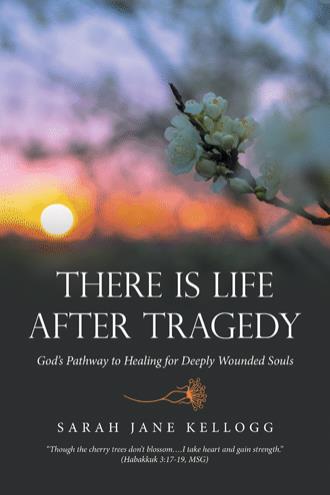
NOTE: This free Bible Study Guide is based on the book, There Is Life after Tragedy, by Sarah Jane Kellogg. The Study Guide goes hand-in-hand with the chapters in the book. To purchase a copy, go to www.sarahjanekellogg.com and click on the “BUY THE BOOK” tab. Clicking on the link there will take you to Amazon. Cost is $13.95.

IT’S HERE: Free Bible Study Guide!

This week I will be launching a free online Bible Study Guide to my book There Is Life after Tragedy. I will be posting the lessons on my blog one or two per week until all lessons are out there. If you are already subscribed to my blog, they will come directly to your email inbox. If you’re not subscribed, simply locate Subscribe in the black section on my website and sign up now! And here’s why….

This Bible Study could be just for YOU—if you feel like the enemy has stolen your life and won’t give it back. If the pain of loss is holding you in a headlock. If you have memories that hurt, or you’re drowning in sadness, sorrow or grief. If any of these describe you, you are not alone.

“A recent study done before the pandemic by Amerispeak and WebMD, found that 57% of Americans are grieving the loss of someone close to them over the past three years. That means every other person you see is grieving—because grief never really goes away.”1

That was life in America in 2019. I’m not sure I want to know the percentage after the Coronavirus, if it’s even measurable. But regardless of how many of us are stuck in the grief cycle, the bigger question for you is: How can you get free?

In this Study Guide you will find answers to your questions and discover that God has a plan to bring you out of your pain. In case you don’t already know this: God already has a plan to help you! You will also find current-day issues being discussed that society tends to leave untouched—such as mental illness or the pitfalls of modern technology. Every lesson is packed with helpful questions and thoughtful meditations, and ends with a prayer crafted just for you. You won’t be disappointed. I promise!

If you can’t do the study right now, you can locate the lessons at a later time on my website in the Categories section. Go down until you find Bible Study Guide ~ There Is Life After Tragedy. Also, there is help on how to print the Study Guide from the website by clicking on the STUDY GUIDE tab.

Get your Bible Study friends gathered up so you will be ready when the first lesson goes live. If you don’t already have my published book, it is available online from any book retailer or it can be found by clicking on the BUY THE BOOK tab on my website. It provides a direct link to Amazon. The book sells for $13.95.

For a quick preview, check out the Sample Study Guide by clicking the STUDY GUIDE tab on my website. You can get an idea of how it feels, looks, the style, the tone, and the depth of questions to be considered. AND, please leave me some comments if you have any input that may help or encourage others!

I am so excited to share God’s great plan with you soon!

~ Sarah Jane

1 Accessed February 19, 2024, https://www.eterneva.com/resources/coping-with-loss